




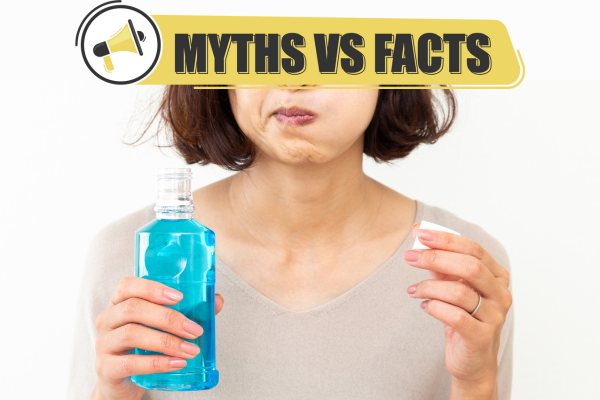
Mouthwash – Myths and Facts: Clearing the Air on Oral Rinses
Mouthwash has become a staple in many people’s daily oral hygiene routine. With promises of fresher breath, cleaner mouths, and fewer cavities, it’s easy to see why. But with so many products on the market and varying opinions about its effectiveness, several myths surround the use of mouthwash.
Is it truly necessary? Can it replace brushing? Does it actually cure bad breath? In this blog, we break down the most common myths and facts to help you make informed decisions about your oral care.
Myth #1: Mouthwash Can Replace Brushing and Flossing
Fact: Mouthwash is not a substitute for brushing and flossing.
While it can reduce bacteria, freshen breath, and rinse away food particles, it cannot remove plaque or clean between teeth the way brushing and flossing do. Think of mouthwash as a supportive step—not the main cleaning process.
Myth #2: All Mouthwashes Are the Same
Fact: Different mouthwashes serve different purposes.
Types of mouthwash include:
- Cosmetic mouthwashes: Control bad breath temporarily but don’t treat underlying issues.
- Therapeutic mouthwashes: Contain active ingredients like fluoride, chlorhexidine, or essential oils to fight plaque, gingivitis, or cavities.
Others target dry mouth, whitening, or gum health. Always read labels and choose one that suits your needs.
Myth #3: Mouthwash Is Only for Bad Breath
Fact: Mouthwash does more than just freshen breath.
Therapeutic mouthwashes can:
- Help prevent tooth decay (fluoride)
- Reduce plaque and gingivitis
- Soothe mouth ulcers
- Aid healing after dental procedures
- Manage dry mouth
Myth #4: Alcohol-Based Mouthwashes Are Unsafe
Fact: Alcohol-based mouthwashes are generally safe when used as directed.
The alcohol helps preserve the formula and dissolve active ingredients. However, people with sensitive mouths or dry mouth may find them irritating. Alcohol-free options are available and effective.
Myth #5: Using Mouthwash Too Often Is Harmless
Fact: Overuse can have drawbacks.
Strong or medicated rinses may cause:
- Tooth staining (especially chlorhexidine)
- Altered taste
- Irritation of oral tissues
- Disruption of the oral microbiome
Unless prescribed, use mouthwash once or twice a day as per instructions.
Myth #6: Mouthwash Is Not Safe for Children
Fact: Mouthwash can be safe for children over age 6—under supervision.
Children must be able to rinse and spit reliably. Pediatric-friendly, alcohol-free options are recommended, and parents should supervise use.
Myth #7: Mouthwash Instantly Cures Bad Breath
Fact: It masks bad breath temporarily but may not solve the root cause.
Persistent bad breath may be due to:
- Poor oral hygiene
- Gum disease
- Dry mouth
- Tonsil stones
- Digestive or systemic issues
Chronic halitosis requires diagnosis and treatment, not just mouthwash use.
Tips for Proper Mouthwash Use
- Use after brushing and flossing for best results.
- Measure correctly—usually 20 ml.
- Swish for 30–60 seconds.
- Avoid rinsing with water afterward.
- Don’t eat or drink for 30 minutes post-use.
Final Thoughts
Mouthwash can be an effective addition to your oral care routine—but it’s important to understand what it can and cannot do. When used correctly and combined with brushing, flossing, and regular dental checkups, it supports gum health, prevents decay, and keeps your breath fresh.
Always choose a mouthwash that fits your oral health needs, and consult your dentist if you’re unsure which type works best for you.